

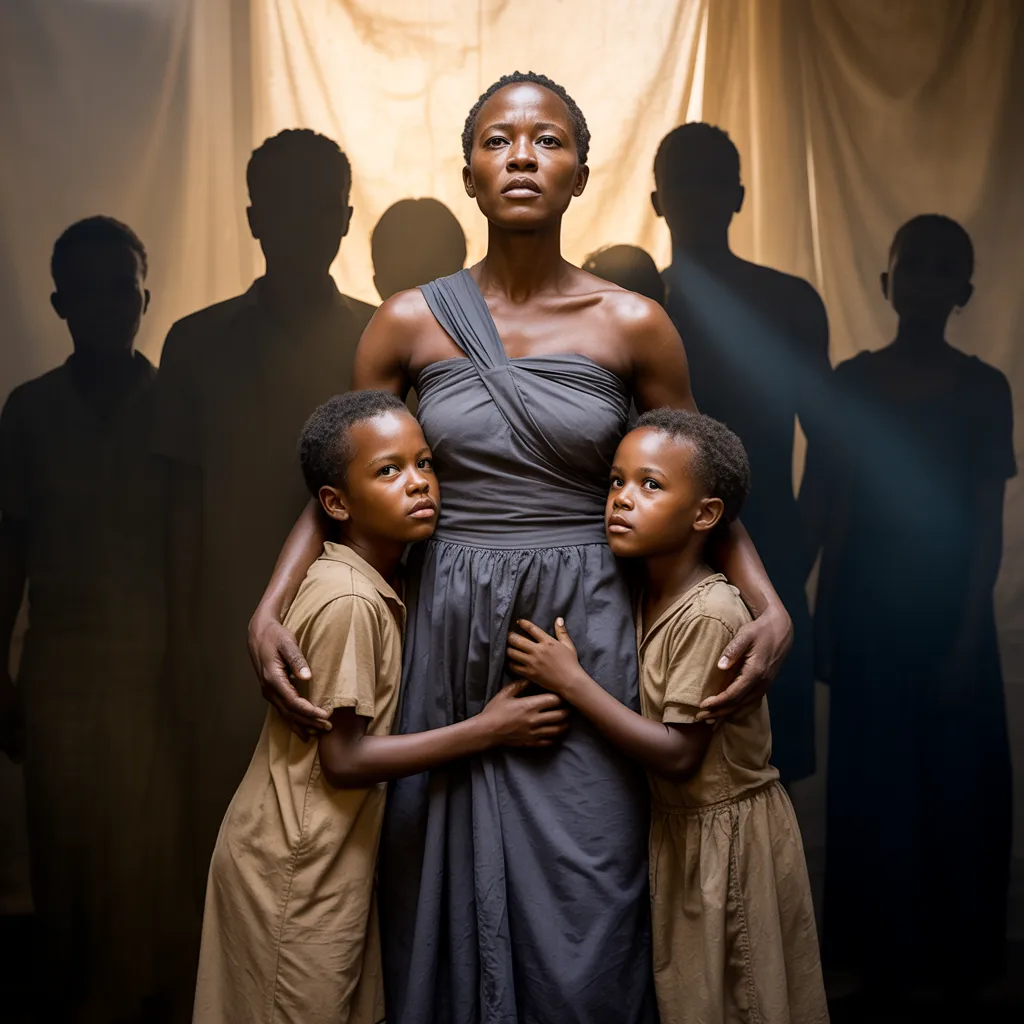
A man dies, and overnight, his widow becomes public property. Relatives who barely acknowledged her when her husband was alive suddenly have strong opinions about how she should grieve, where she should live, who she should be, and whether she’s even fit to raise her own children. And the children watch.
They watch their mother—the person who wipes their tears and makes them feel safe—become powerless in her own life. They watch relatives strip away her dignity under the guise of tradition. They watch “family” transform into predators circling grief. And they learn lessons that will echo through generations.
This isn’t about cultural differences or traditional values. This is about how the systematic mistreatment of widows teaches children to fear family, distrust community, and ultimately sever ties to cultural heritage entirely. The impact doesn’t stop with the grieving widow—it radiates outward, shaping how her children and grandchildren will relate to family forever.
The Rituals of Dehumanization
In many cultures, widows undergo rituals supposedly meant to help them transition or “cleanse” them. Stripped of choice and autonomy during their most vulnerable moment, they’re subjected to practices that range from uncomfortable to actively harmful, all while their children watch or know what’s happening.
A woman forced to drink water used to wash her deceased husband’s body. A mother required to sleep on the floor, denied basic comforts during the rawest part of her grief. A widow pressured to shave her head, wear specific clothing, or avoid certain foods—external controls over her body and choices. A woman subjected to “cleansing” rituals that are physically invasive and psychologically degrading. A mother told she must marry her late husband’s brother, her preference irrelevant to the family’s decision.
These aren’t ancient practices confined to dusty history books. They’re happening right now, in modern communities, defended as “tradition” by people who would never submit to them personally.
And the children? They’re learning that when you’re at your most vulnerable, family won’t protect you they’ll exploit you. They’re watching their source of security be stripped of her own security. They’re discovering that “tradition” can mean cruelty, and “family” can mean danger.
The Property Problem
Financial exploitation of widows is so common it’s almost normalized. The moment a man dies, relatives often begin calculating how to access whatever he left behind—and the widow and her children are obstacles to be managed, not people to be protected.
Brothers-in-law who position themselves as “helping” while systematically transferring assets into their own names. Extended family who claim cultural rights to manage the estate, then mismanage it entirely in their own favor. Relatives who move into the family home, claiming space and authority that isn’t theirs. Family members who make financial decisions that affect the widow and children without consulting them. In-laws who treat the widow’s inheritance as family property they have every right to access.
What makes this particularly insidious is how it’s packaged. These relatives aren’t stealing—they’re “managing things” for someone who “doesn’t understand” or “isn’t capable.” They’re not exploiting—they’re “protecting family assets.” They’re not abusing—they’re “following tradition.”
But the children see through it. They watch their mother’s security evaporate while relatives who claim to care about family well-being enrich themselves. They learn that family love is conditional on access to resources. They discover that the people who should protect the vulnerable are often the first to exploit them.
The Undermining of Maternal Authority
Even when direct financial exploitation isn’t happening, many families systematically undermine a widow’s authority over her own children. Decisions about education, healthcare, religious upbringing, or daily life suddenly become family matters requiring extended input. The widow’s choices are questioned, second-guessed, or overruled entirely.
“She’s too emotional to make good decisions right now.” “The children need a male influence.” “She doesn’t understand how to raise boys/girls properly.” “We need to make sure she doesn’t spoil them or be too lenient out of guilt.”
This constant questioning of her judgment doesn’t just disrespect the widow and it actively destabilizes children who’ve already lost one parent. Now they’re watching the remaining parent be treated as incompetent or unreliable. How are they supposed to feel secure when the adults around them don’t trust the one person still protecting them?
Children in these situations often develop anxiety, become parentified (taking on adult responsibilities to protect their mother), or lose trust in authority figures entirely. They learn that even your own family won’t respect you when you’re vulnerable, and that strength is the only thing that commands basic consideration.
The Shame Campaign
Many families don’t just exploit widows financially, they humiliate them socially. The widow finds herself subjected to constant commentary and comparison. She’s widowed too young, so she must have done something to deserve it. She’s showing grief incorrectly ,too much emotion or too little, too public or too private. Her children are struggling, which proves she’s a bad mother. She’s managing financially, which means her husband must not have left much (implying he wasn’t successful). She’s struggling financially, which means she’s wasteful or incompetent.
Whatever she does, she’s doing it wrong. And the children hear every word of it. They watch their mother being blamed for circumstances beyond her control. They see her humiliated at family gatherings, talked about in whispered conversations, judged for surviving.
Children of humiliated mothers often grow up either extremely protective (sometimes to unhealthy levels) or deeply resentful of the mother they perceive as weak. Neither response is fair to the child or the mother, but both are natural reactions to watching someone you love be degraded while “family” watches or participates.
The Next-Generation Impact
The exploitation of widows doesn’t just affect the immediate family it creates patterns that echo for generations. Children who watch their mothers being mistreated grow up with specific beliefs about family, gender, power, and security:
The Cultural Rejection: These children often want nothing to do with the culture that enabled their mother’s mistreatment. They move away geographically and emotionally, refusing to participate in traditions they associate with their mother’s pain. They marry outside their culture, raise children without teaching them the language or customs, and feel no obligation to maintain family ties.
Is this about not valuing culture? No. It’s about survival. When culture was weaponized against someone you love, embracing that culture feels like betrayal.
The Relationship Templates: Daughters who watched their mothers be exploited often become either financially independent to the point of refusing help from anyone, or dependent to the point of never leaving obviously unhealthy relationships. Sons who watched their mothers be mistreated often become either overprotective to the point of controlling, or distant to the point of neglect both extremes rooted in the same childhood powerlessness.
The Family Distrust: Children who watched extended family exploit their grieving mother often sever all ties the moment they’re able. They don’t attend family gatherings, don’t maintain contact with relatives, don’t expose their own children to the people who hurt their mother. And when family members ask why they’re so distant, they genuinely don’t understand that the answer is: We watched what you did. We remember.
The Financial Hypervigilance: Many children of exploited widows become obsessed with financial security. They may be extremely frugal, have multiple income streams, refuse to share financial information with anyone, or struggle to accept help even when needed. This isn’t greed it’s trauma response. They watched their mother’s vulnerability be weaponized, and they’re determined never to be that vulnerable.
What Protection Looks Like
Protecting widows and their children requires more than kind words it requires action.
Women need financial literacy and independence before tragedy strikes. This isn’t about planning for divorce or widowhood ,it’s about basic life competence. Women who can manage finances, understand legal rights, and maintain economic independence are harder to exploit.
Communities need to actively protect vulnerable members rather than prey on them. This means calling out exploitation when you see it, supporting widows against predatory family members, and refusing to hide behind “tradition” when tradition enables abuse.
Men need to make their wishes clear regarding their wives and children’s future. Written wills, frank conversations with family about boundaries, and explicit instructions that the widow’s authority over her own life and children will be respected.
Children need adults who validate their experiences. When they say they’re uncomfortable with how family is treating their mother, believe them. When they resist contact with exploitative relatives, support them. When they need space to grieve without family performance, protect that space.
Breaking the Cycle
The children of exploited widows grow up to make two very different choices: some continue the pattern, having learned that this is how family works; others break completely with family, determined never to expose their own children to what they experienced.
The tragedy is that both responses rob future generations of healthy cultural connection and family relationships. The first perpetuates harm; the second severs heritage.
There is a third option, though it’s harder: keeping what’s valuable about cultural heritage while actively rejecting what’s harmful. This requires:
Honest examination of which traditions serve families and which serve only those in power. Active resistance to practices that harm vulnerable people, regardless of how they’re labeled. Clear, consistent protection of widows and children from exploitation. Passing down cultural values (community care, respect for elders, strong family bonds) while refusing to pass down cultural harms (widow exploitation, gender inequality, blind obedience to authority).
This is the only way to maintain cultural continuity without sacrificing human dignity. This is how we honor our ancestors’ best intentions while acknowledging their worst mistakes. This is how we create family legacies worth inheriting.
Next week, we’ll explore specific strategies for protecting children from abusive relatives while maintaining healthy family connections where possible.
For now, if you’re a widow reading this: what happened to you wasn’t your fault, and your children saw your strength even when family tried to make you feel powerless. And if you’re the child of a widow who was mistreated: your distance from family isn’t ungrateful or disrespectful rather it’s protective. You’re breaking a cycle that should have been broken generations ago.