
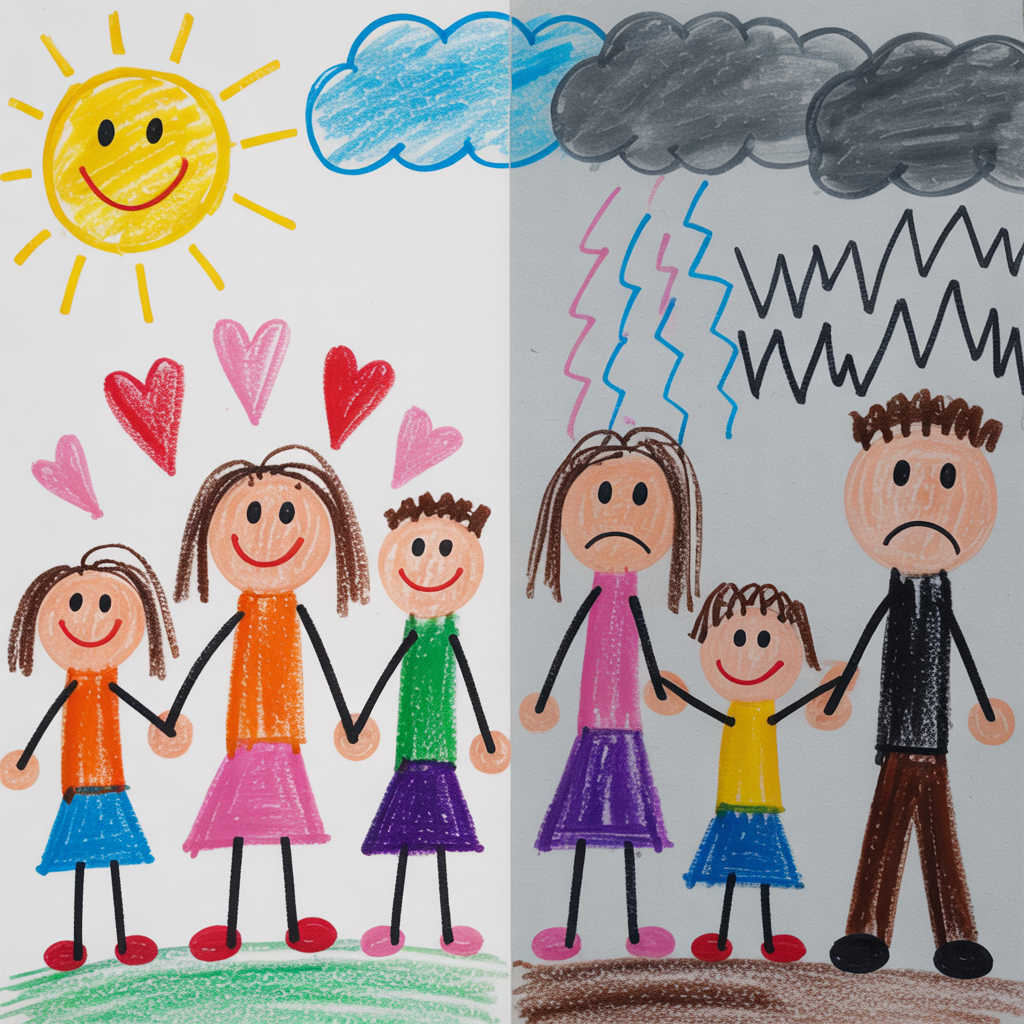
Every family has one.
The uncle who drinks too much at gatherings and gets “handsy.” The older cousin whose “play wrestling” always seems to involve inappropriate touching. The grandfather who insists on lap-sitting with grandchildren who are way too old for it. The aunt’s boyfriend who’s “just being friendly” but makes every young girl in the family uncomfortable.
Everyone knows. Everyone sees it. Everyone makes excuses, minimizes it, or actively covers it up.
And the children?
They’re learning that family silence is more important than their safety. That reporting abuse will make them the problem. That predators are protected while victims are blamed.
This has to stop.
The Family Protection Racket
Family sexual abuse isn’t usually dramatic or obvious. It’s rarely the stranger-in-the-bushes scenario we warn children about.
It’s usually gradual, normalized, and protected by a conspiracy of silence that involves almost everyone who knows.
It starts with boundary testing:
Does this child protest when I touch them? Do the adults notice? Do they intervene?
When nothing happens—when the child’s discomfort is dismissed or the adults conveniently don’t see—the behavior escalates.
What It Looks Like
“Accidental” touching that happens repeatedly.
“Affection” that involves areas of the body that shouldn’t be touched.
“Jokes” with sexual content directed at children.
“Playful” behavior that mimics or escalates to sexual contact.
Gifts or special attention exchanged for physical contact or secrecy.
Private time demanded with specific children.
Photography or videos of children that seems excessive or inappropriate.
The Excuses That Enable Abuse
The entire time, family members construct explanations that maintain the fiction that nothing wrong is happening:
“He’s just affectionate.”
“She’s overreacting.”
“He’s from a different generation—they don’t understand personal space the same way.”
“She’s reading too much into innocent behavior.”
“He would never—I’ve known him for years.”
“She’s at that age where everything seems sexual to her.”
These explanations serve one purpose: protecting the predator by discrediting the victim.
Why Families Protect Predators
Understanding why families enable abuse is crucial to stopping it:
Reputation Protection
The family’s public image matters more than a child’s safety.
Addressing abuse means admitting it happened, which feels shameful, so denial becomes preferable to truth.
Relationship Preservation
If we acknowledge what Uncle did, we’d have to cut him off. That would upset Grandma, split the family, ruin holidays.
It’s easier to pressure the victim to stay quiet than to hold the perpetrator accountable.
Misplaced Loyalty
“Family doesn’t report family” is a value system that serves predators perfectly.
When loyalty to family supersedes protection of children, abuse flourishes.
Minimization Culture
There’s a scale in many people’s minds where “it wasn’t that bad” justifies inaction.
Unless it was “actual rape,” it doesn’t count as real abuse. This arbitrary hierarchy of harm leaves countless children unprotected.
Victim Blaming
It’s psychologically easier to blame a child for “being provocative” or “exaggerating” than to confront the reality that someone you know—and perhaps love—is a predator.
Economic Dependence
Sometimes the predator controls family finances.
Confronting them might mean loss of housing, education funding, or survival resources. Children are sacrificed for economic security.
Cultural Factors
Some cultures have particularly strong taboos against acknowledging sexual matters, making it nearly impossible to address sexual abuse explicitly.
The shame around the topic protects the predator.
Why This Particularly Harms Children
Sexual abuse by family members creates specific trauma that differs from abuse by strangers:
Betrayal Trauma
The violation comes from someone who should protect you, in an environment that should be safe.
This fractures fundamental trust in relationships.
Environmental Gaslighting
When everyone around you minimizes or denies what’s happening, you start doubting your own reality.
Children in these situations often struggle with trusting their own perceptions for the rest of their lives.
Forced Continued Contact
Unlike abuse by strangers, family abuse often requires ongoing contact with the perpetrator at gatherings, holidays, and family events.
The child must repeatedly face their abuser while pretending everything’s fine.
Social Isolation
If the child tries to tell and isn’t believed, they learn that reporting is pointless and dangerous.
They become isolated with their trauma, unable to seek help.
Complicity Training
Children are often explicitly or implicitly told to keep secrets, stay quiet for family peace, or not cause trouble.
They’re trained to prioritize the predator’s protection over their own safety.
Identity Damage
When your family protects your abuser over protecting you, you learn that you’re not worth protecting.
This damages self-worth in ways that echo for decades.
Warning Signs Parents Must Not Ignore
Children rarely directly report family sexual abuse, especially when they’ve tested the waters and found adults unwilling to listen.
Instead, they signal distress:
- Sudden fear of or resistance to specific relatives or situations
- Regression in behavior—a child who was potty-trained starts having accidents, a teen becomes clingy
- Sleep problems, nightmares, or fear of sleeping alone
- Inappropriate sexual knowledge or behavior for their age
- Self-harm, eating disorders, or other destructive coping mechanisms
- Withdrawal from activities they used to enjoy
- Anxiety or panic symptoms, especially before family gatherings
- Explicitly asking not to be left alone with specific people
- Physical complaints—stomach aches, headaches—that worsen around specific relatives
Any of these, especially in combination or in relation to specific people, requires investigation.
And by investigation, I mean believing your child enough to act protectively—not interrogating them to “prove” their concerns are valid.
Breaking the Silence
Protecting children from family sexual abuse requires adults to get uncomfortable:
Believe Children
When a child tells you someone makes them uncomfortable or describes inappropriate behavior, believe them.
Children rarely fabricate these concerns—they’re more likely to minimize or hide them.
Trust Behavior Over Explanations
If your child consistently avoids a relative or shows distress around them, that matters more than the relative’s explanation of their behavior.
Interrupt Immediately
If you see inappropriate touching, comments, or boundary violations, address it immediately and directly.
“That’s not appropriate. Stop.”
No room for interpretation.
Remove the Child
If a situation feels off, remove your child from it immediately.
You can process what happened and why later. In the moment, prioritize getting your child to safety.
Don’t Demand Proof
Children shouldn’t have to prove their concerns merit protection.
Their discomfort is sufficient. Protect first, investigate later.
Name It Clearly
Don’t use euphemisms.
“Uncle touched you inappropriately” or “That was sexual abuse” gives children language for what happened and validates their experience.
Report Appropriately
Depending on what happened, this might mean cutting contact, reporting to authorities, or both.
“Handling it within the family” usually means protecting the abuser.
Prepare for Pushback
Family will pressure you to minimize, forgive, maintain contact “for family unity.”
Expect this and decide in advance that your child’s safety is non-negotiable.
The “But He’s Family” Defense
The most common defense of family predators is relationship:
“He’s your uncle—he loves you.”
“She’s been part of this family for thirty years.”
“He would never hurt you on purpose.”
“She’s just old-fashioned about affection.”
None of this matters.
Loving you doesn’t give someone the right to violate your boundaries.
Being family doesn’t grant unlimited access to children’s bodies.
Decades of presence doesn’t excuse predatory behavior.
And “old-fashioned” is not a synonym for “gets to touch children inappropriately.”
Family relationship should raise the bar for behavior, not lower it. We should expect MORE respect for boundaries from family, not less.
When we accept lower standards for relatives, we’re telling children that the people closest to them are the ones they should most fear.
What Protection Actually Looks Like
Protecting children from family sexual abuse means:
Never forcing physical affection with anyone.
Teaching children accurate names for body parts and that those are private.
Having explicit conversations about inappropriate touching, including from relatives.
Believing children when they report discomfort.
Limiting or eliminating contact with relatives who violate boundaries.
Supervising all interactions with relatives who make children uncomfortable.
Leaving immediately if inappropriate behavior occurs.
Reporting abuse to authorities when appropriate, regardless of family consequences.
Prioritizing your child’s safety over family harmony, every single time.
What to Teach Children
Your body belongs to you.
No one has the right to touch you in ways that make you uncomfortable.
If someone touches you inappropriately, it’s not your fault.
Secrets about touching are never okay.
If an adult asks you to keep a physical contact secret, tell a trusted adult immediately.
You won’t get in trouble for telling about inappropriate behavior—the adult behaving inappropriately will.
The Cultural Complication
Some cultures have particular challenges with addressing family sexual abuse:
Strong shame cultures where acknowledging sexual matters publicly is taboo.
Cultures with rigid hierarchy where questioning elders’ behavior is considered extreme disrespect.
Communities where family reputation is prioritized above individual wellbeing.
Contexts where discussing bodies and boundaries is considered inappropriate or “too Western.”
But here’s the reality: every culture has children being abused by family members. And every culture has children who need protection more than they need culture that enables their harm.
Honoring cultural values doesn’t require accepting cultural practices that harm children.
True cultural wisdom prioritizes protecting the vulnerable.
When “culture” is used to silence victims and protect predators, it’s not culture—it’s abuse wearing culture’s mask.
For Adults Who Were Victims
Many adults reading this remember being that child—the one whose concerns were dismissed, whose abuse was minimized, who learned that family silence mattered more than their safety.
You deserved protection that you didn’t receive.
The adults who failed to protect you failed in their fundamental responsibility. Your experience was real, significant, and worthy of being called what it was: abuse.
And now you have the opportunity to break that cycle.
Every time you believe a child, interrupt inappropriate behavior, or prioritize a child’s safety over family peace, you’re doing what wasn’t done for you.
You’re changing the pattern.
The Cost of Continued Silence
When families protect predators:
More children get abused as the predator continues accessing victims.
Victims learn they’re not worth protecting and carry that wound for life.
The family develops a culture of silence that affects other issues beyond abuse.
Children grow up and cut off family entirely, often without explaining why.
Generations of children learn to fear and avoid family rather than find refuge in it.
The cost of breaking silence might feel high in the moment—family conflict, relationship ruptures, social consequences.
But the cost of maintaining silence is devastating and permanent.
The Question Every Parent Must Answer
If a child told you they were uncomfortable with a family member, would you believe them enough to act?
If the answer is anything less than an absolute yes, figure out why—and fix it.
Children are watching to see if we’ll actually protect them.
What are we showing them?
Next week, we’ll discuss how to actually set and maintain boundaries with toxic relatives, including scripts for difficult conversations and strategies for managing family pushback.